
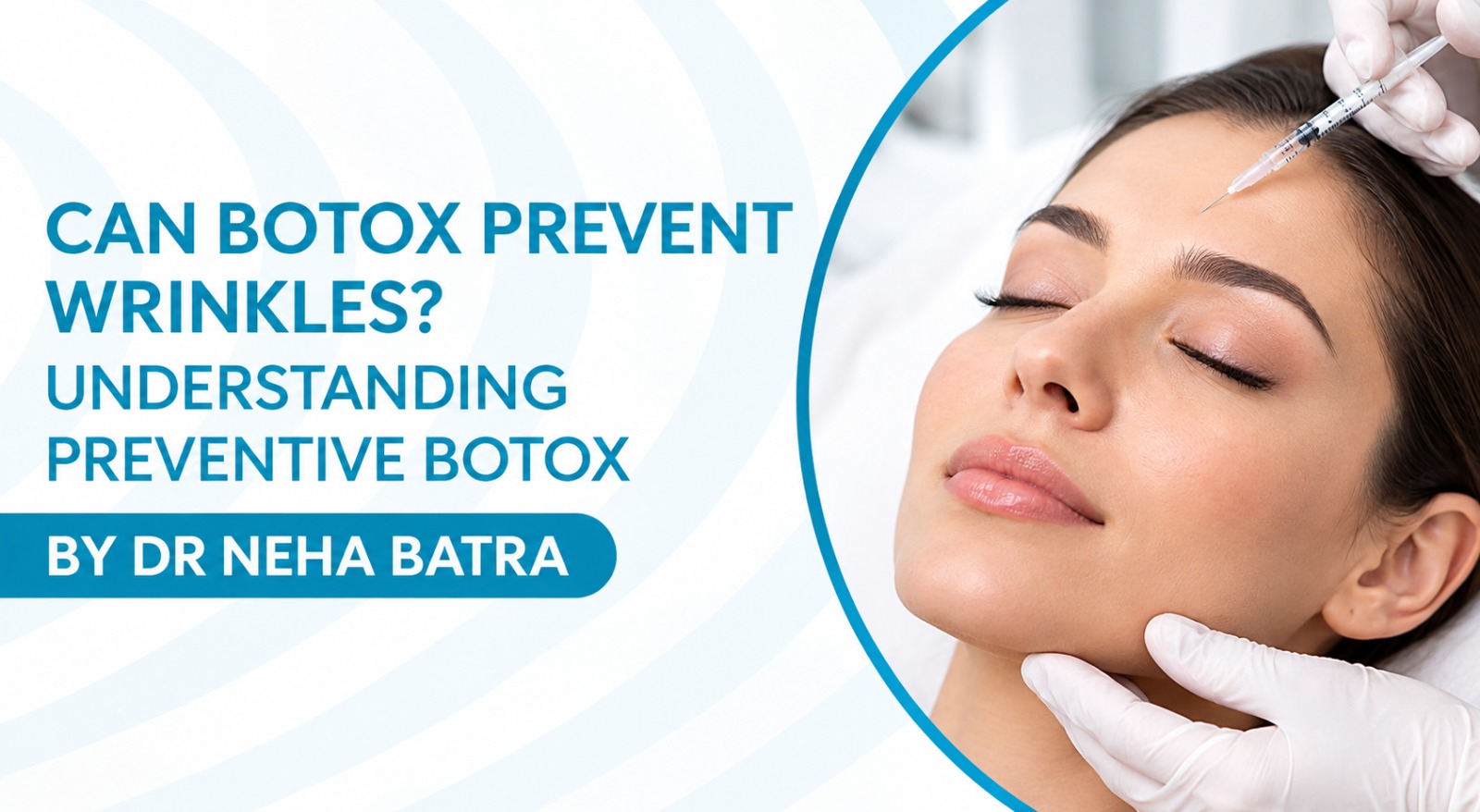
Have you ever noticed fine lines on your forehead when you raise your eyebrows or lines between your eyebrows when you frown? These lines are a normal part of facial expressions, but over time, they may become more noticeable.
Many people now explore preventive Botox to understand whether they can reduce the appearance of wrinkles before they become deeper.
Yes, Botox may help reduce the repeated facial muscle movements that contribute to certain expression lines. However, it cannot prevent all wrinkles or stop the natural ageing process.
If you are considering Botox treatment in Delhi, understanding how preventive Botox works, when it may be suitable, and what results to expect can help you make a better decision.
In this guide, Dr. Neha Batra Clinic explains preventive Botox in simple language, including its benefits, possible side effects, and important things to consider before treatment.
What Is Preventive Botox?
Preventive Botox is a cosmetic treatment that aims to reduce the muscle movements that contribute to early expression lines.
When you smile, frown, or raise your eyebrows, the muscles in your face move and fold the skin. Over time, repeated movements can cause lines to become more visible, even when your face is relaxed.
Botox temporarily relaxes selected facial muscles, helping soften these lines.
Preventive Botox is commonly considered for:
- Forehead lines: Lines that appear when you raise your eyebrows.
- Frown lines: Lines between the eyebrows that appear when you frown.
- Crow’s feet: Fine lines around the outer corners of the eyes.
Preventive Botox does not mean you need injections before you develop wrinkles. It is an optional treatment that may be suitable for some adults after a professional assessment.
Can Botox Prevent Wrinkles Before They Appear?
Botox may help delay the deepening of certain expression lines, but it cannot guarantee wrinkle prevention.
Repeated facial movements can gradually make some lines more noticeable. Botox temporarily reduces activity in selected muscles, which may help limit repeated skin folding in those areas.
However, wrinkles develop for several reasons, including:
- Natural ageing and changes in skin elasticity
- Sun exposure and UV damage
- Genetics and individual skin characteristics
- Smoking and other lifestyle factors
- Repeated facial expressions over time
Botox mainly targets muscle movement. It does not directly treat every cause of wrinkles, such as sun damage or loss of skin elasticity.
If your goal is to maintain healthy-looking skin, daily sunscreen, a suitable skincare routine, and healthy habits remain important, whether or not you choose Botox.
How Does Preventive Botox Work?
Botox contains botulinum toxin type A, which temporarily blocks signals between nerves and targeted muscles. This reduces muscle contraction in the treated area.
Here is how it works:
1. Reduces selected muscle movements
Botox relaxes specific muscles that contribute to expression lines, such as those caused by frowning or raising the eyebrows.
2. Helps soften early lines
When these muscles move less strongly, certain expression lines may become less noticeable.
3. May help reduce repeated skin folding
By limiting repeated movements in treated areas, Botox may help reduce the deepening of some expression lines over time. The long-term preventive effect varies, and results cannot be guaranteed.
4. Provides temporary results
Botox is not permanent. Its effects commonly last around three to four months, although this varies from person to person.
A qualified medical professional can help determine whether treatment is appropriate and when it should be reassessed.
When Should You Consider Preventive Botox?
There is no fixed age at which everyone should start preventive Botox. Some people notice expression lines in their twenties, while others develop them much later.
The decision should depend on your facial movements, skin condition, personal goals, and medical history rather than age alone.
Here is a general guide:
- In your twenties: You may not need Botox simply because you are concerned about future wrinkles. Sun protection and a good skincare routine are useful first steps.
- In your late twenties or thirties: If expression lines are becoming more noticeable, you can discuss suitable options with a qualified medical professional.
- In your forties and beyond: Botox may help soften certain existing expression lines, depending on their depth and your individual needs.
These age groups are only general examples, not medical recommendations. You do not need to start Botox at a particular age to maintain healthy-looking skin.
Preventive Botox vs Regular Botox: What Is the Difference?
Preventive Botox and regular cosmetic Botox use the same basic treatment approach. The main difference is the reason a person considers treatment.
| Preventive Botox | Botox for Existing Wrinkles |
|---|---|
| Focuses on early expression lines and repeated facial movements. | Helps soften visible expression lines. |
| May be considered before wrinkles become deeper. | May be considered when wrinkles are already noticeable. |
| Results depend on facial movements and individual needs. | Results depend on wrinkle depth and muscle activity. |
| May help reduce the deepening of certain expression lines but cannot prevent all wrinkles. | May soften certain wrinkles but may not remove them completely. |
| Results are temporary. | Results are temporary. |
Both approaches require an individual assessment. Preventive Botox is not necessary for everyone, and the treatment plan should match the person’s concerns.
What Are the Benefits of Preventive Botox?
Preventive Botox may offer some benefits for people who are suitable candidates.
1. May Help Reduce Early Expression Lines
Botox can soften certain lines caused by repeated facial movements, including forehead lines, frown lines, and crow’s feet.
2. May Help Limit the Deepening of Some Lines
By reducing muscle activity in selected areas, Botox may help limit repeated skin folding. However, it cannot stop all wrinkles from developing.
3. Does Not Require Surgery
Botox is given through injections and does not involve surgery. Some people experience temporary redness, swelling, or bruising after treatment.
4. Can Be Tailored to Individual Needs
Every face is different. A qualified medical professional can assess your facial movements and discuss whether Botox is suitable for your concerns.
5. Offers Temporary Results
The effects gradually wear off, allowing you and your clinician to reassess your needs over time. You are not required to continue treatment if you decide it is no longer right for you.
Are There Any Side Effects of Preventive Botox?
Yes. Botox is a medical treatment, so it can cause side effects even when used for cosmetic purposes.
Possible side effects include:
- Mild pain or discomfort during injections
- Temporary redness, swelling, or bruising
- Headache
- Temporary eyelid or eyebrow drooping
- Uneven results or changes in facial expression
Rarely, more serious complications can occur if the toxin affects muscles beyond the intended treatment area.
Before treatment, tell your doctor about your medical conditions, allergies, medications, and previous cosmetic procedures. Botox may not be suitable for everyone.
Cosmetic Botox is generally avoided during pregnancy and breastfeeding because safety data are insufficient. People with certain neuromuscular conditions also need careful medical assessment.
If you experience difficulty breathing, swallowing, or speaking after Botox treatment, seek urgent medical attention.
How Can You Prevent Early Signs of Skin Ageing Without Botox?
Botox is only one option for managing expression lines. Simple daily habits can also help protect your skin and reduce some causes of premature ageing.
Here are a few steps you can follow:
- Use sunscreen every day: Choose broad-spectrum sunscreen with SPF 30 or higher to help protect your skin from UV damage.
- Moisturise regularly: Use a moisturiser suited to your skin type to help maintain the skin barrier.
- Follow a simple skincare routine: A gentle cleanser and suitable skincare products can support healthy-looking skin.
- Avoid smoking: Smoking contributes to premature skin ageing.
- Get enough sleep: Good sleep habits support overall health and skin wellbeing.
- Speak to a professional about skincare ingredients: Some ingredients, such as retinoids, may help improve certain signs of sun damage. They are not suitable for everyone and should be avoided during pregnancy.
These steps will not prevent every wrinkle, but they can help you look after your skin without relying only on cosmetic treatments.
Where Can You Get Botox Treatment in Delhi?
If you are thinking about preventive Botox, choosing the right medical professional is an important step. The goal should be to understand your concerns, explore suitable options, and make an informed decision.
At Dr. Neha Batra Clinic, people considering Botox treatment in Delhi can discuss their concerns about forehead lines, frown lines, and other expression lines.
Dr. Neha Batra can assess your concerns, explain what Botox may and may not achieve, and discuss the possible risks and alternatives during a consultation.
When looking for a Botox doctor in Delhi, consider the doctor’s relevant medical qualifications, experience in aesthetic treatments, knowledge of facial anatomy, and approach to patient safety.
Before proceeding, ask questions about the treatment, expected results, possible side effects, and aftercare. A good treatment plan should be based on your individual needs rather than your age alone.
If you want to learn more about your options, you can explore the Botox treatment services offered by Dr. Neha Batra Clinic.
Final Thoughts
Preventive Botox may help reduce early expression lines and limit the repeated muscle movements that contribute to certain wrinkles. However, it cannot stop natural ageing or guarantee that wrinkles will never appear.
You do not need Botox simply because you have reached a certain age. The right choice depends on your skin, facial movements, expectations, and medical suitability.
A good skincare routine, daily sun protection, and professional advice are important parts of caring for your skin.
